Back arrow

Go back

What type of birth control is best for me? A guide to choosing the right method

Compare birth control options—pill, patch, ring, shot, IUDs, implant, condoms, and more—and learn how to choose the best method for lifestyle, side effects, and health needs.

Figuring out the best birth control for you can feel like a lot. There are several types of birth control methods, each with different hormones, schedules, and vibes. And when you’re already juggling life, work, relationships, and all the things, the last thing you need is another overwhelming decision on your plate.

The good news? There is no one “perfect” method for everyone—just the one that fits your body and your lifestyle the most comfortably. Think of it like picking out your everyday shoes. Some people swear by sneakers, some love a cute sandal, and others need the support of a sturdy boot. Your birth control should work with you, not against you.

If you ever want guidance, Hey Jane can help you sort through 100+ birth control options and get prescriptions sent straight to your door or pharmacy—all online. See if you’re eligible.

How to choose the right birth control for you

Wondering how to choose birth control that fits your life? Here are a few considerations to narrow your options quickly.

Step 1: Start with the big decision drivers

Consideration What to consider (and questions to ask yourself or provider)
Hormones Ask: “Do I want hormonal or hormone-free?” “Do I need to avoid estrogen?”
Convenience Ask: “Can I remember a daily pill?” “Do I want something I don’t have to think about?”
Side effects Ask: “How did I feel on past methods?” “Which side effects would make me switch?”
Health conditions Ask: “Do I have migraine with aura, high blood pressure, or other conditions that affect options?” “Should I avoid estrogen?”
Pregnancy goals Ask: “Do I want something long-lasting or easy to stop quickly?” “How soon might I want to get pregnant?”

Step 2: Check the real-life logistics

Consideration What to consider (and questions to ask yourself or provider)
STI protection Ask: “Do I also need STI protection?” (Only condoms help protect against STIs.)
Comfort with procedures Ask: “Am I okay with an in-office procedure (like an IUD or implant)?” “Do I want something I can start/stop on my own?”
Cost and access Ask: “What’s covered by insurance?” “Do I want to get birth control online, delivered, or sent to a pharmacy?”

The main types of birth control

If you’re starting from scratch, it helps to know the three big categories most methods fall under:

Category What it means
Hormonal birth control Uses hormones to prevent ovulation or thicken cervical mucus to block sperm.
Non-hormonal birth control Blocks sperm or creates a physical barrier—no hormones involved.
Natural family planning Involves tracking your menstrual cycle, fertility signs, or timing sex to reduce pregnancy risk.

Hormonal birth control options

Hormonal methods are super popular, and you’ve probably heard of most of these. They all use hormones—estrogen, progestin, or both—to prevent pregnancy, but the routines are different, and so are the side effects.

Method What it is
Combination pill A daily pill with estrogen and progestin is one of the most common and flexible options.
Mini pill (progestin-only or POP) A progestin-only pill for people who can’t or prefer not to take estrogen.
Vaginal ring A small ring you place in the vagina for three weeks at a time.
Patch A thin patch you stick on your skin and change weekly.
The shot (Depo) A progestin injection you get every three months.
Hormonal IUDs T-shaped devices placed in the uterus that can last 3–8 years.
Arm implant A tiny flexible rod that goes under the skin of your arm and lasts up to three years.

Non-hormonal birth control options

If you prefer to avoid hormones—whether because of side effects, medical reasons, or just personal choice—you’ve got solid options, too.

Method What it is
Condoms A barrier worn on the penis; it also protects against sexually transmitted infections (STIs).
Internal condoms A flexible pouch placed inside the vagina before sex.
Diaphragm A soft cup that covers the cervix (typically used with spermicide).
Cervical cap Similar to a diaphragm but smaller and shaped differently.
Copper IUD A hormone-free IUD that uses copper to stop sperm from reaching the egg; lasts up to 10 years.
Spermicides and gel Products that slow or block sperm before they reach the cervix.
Compare birth control options with expert, clinical support.
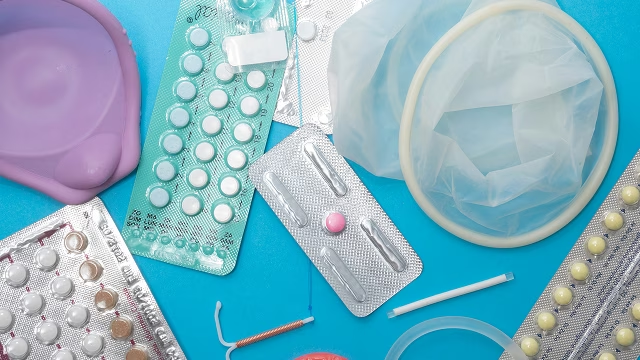
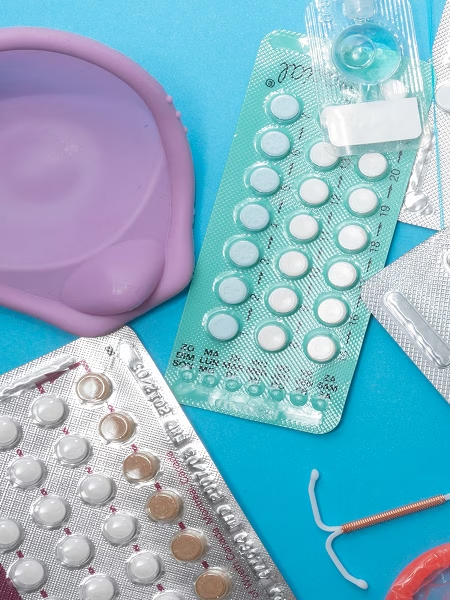
Assortment of birth control methods including pills, diaphragms, internal condoms, IUDs, and more.Assortment of birth control methods including pills, diaphragms, internal condoms, IUDs, and more.

Natural family planning

These methods rely on understanding your cycle and fertility window. They can work well if you’re consistent and comfortable with tracking.

Method What it is
Fertility awareness-based methods Track your temperature, cervical mucus, or cycle patterns to predict ovulation.
Cycle tracking apps Digital tools that help estimate fertile days.
Withdrawal (aka “pulling out”) When a partner withdraws before ejaculation; it's better than nothing, but generally less reliable than other methods.

Where to get birth control online

If you love the idea of managing your contraception without waiting rooms, telehealth can be a game-changer.

Hey Jane offers birth control options via telehealth, including pills, the patch, the ring, and more—plus guidance on choosing the right method. You can do the whole process from your couch, no judgment and no awkward pharmacy conversations required.

And if you ever need backup—aka emergency contraception—Hey Jane has you covered there, too. Get started here. 

FAQs about birth control

Below are some common questions people have about birth control:

Does hormonal birth control cause side effects?

Some people notice changes like spotting, mood shifts, or breast tenderness, depending on the method.

Can birth control help with acne?

Yes, some combination pills are FDA-approved for acne and may improve breakouts.

What if I forget my pill?

What you do next depends on how many pills you missed and where you are in your pack.

Does birth control affect your sleep?

Some people feel no changes at all, while others notice shifts in sleep or energy.

Can I switch methods anytime?

Yes—most people can switch whenever they’re ready, though there are some timing considerations.

Birth control from your couch: Fast online consults, convenient local pickup or delivery
Woman holding a phone, sitting on the couchWoman holding a phone, sitting on the couch

Written by

Taneia Surles, MPH

Taneia Surles, MPH, is a freelance writer, editor, and public health professional specializing in sexual health and wellness. She has bylines in Health, Healthline, mindbodygreen, and Well + Good.

Written by

Sally Borges, RN BSN

Sally Borges (she/her) is a registered nurse and writer with over a decade of experience serving abortion and reproductive healthcare patients. An ardent believer in shared clinical decision making, she gets a thrill when providing accurate, up-to-date education to anyone who’ll listen and seizes every opportunity to break sexual health stigma. Sally is a book lover, a creative lady with a penchant for music and visual arts, and, most importantly, a mother of four incredible people.

Published on:
February 10, 2026
Last updated:
February 10, 2026

Want to take action?
Join the Un-Whisper Network

Thanks for joining!
Oops! Something went wrong while submitting the form.
*By signing up, you agree to receive relevant emails in accordance with our Terms of Service & Privacy Policy. You may unsubscribe at any time.
Get started with Hey Jane
Online birth control prescriptions and expert care
Ready for Roevember logo
Get your free action toolkit

We’ll send our digital toolkit to your inbox—including social media graphics, rally signs, postcards, and more.

Thank you! Your submission has been received!
Oops! Something went wrong while submitting the form.
X icon