
Abortion pills, known as medication abortion, are a safe and effective way to end a pregnancy. The FDA-approved two-pill regimen is up to 98% effective when taken within 10 weeks, according to the FDA.
A huge benefit of abortion pills is that you can complete the abortion privately through Hey Jane, a virtual clinic that can prescribe FDA-approved abortion pills that get mailed directly to your door, so you don't have to leave home. Check out our pregnancy calculator to see how far along you are, and learn if pills are an option for you.
Having a medication abortion involves taking two FDA-approved medicines over a couple of days. Mifepristone, the first of the two abortion pills, will stop the pregnancy from growing by blocking the hormone progesterone. Misoprostol, the second type of pill taken, causes the uterine cramping and bleeding to pass the pregnancy and empty the uterus.
Below are the steps to take the abortion pills:
Step 1: Swallow 1 Mifepristone pill with water
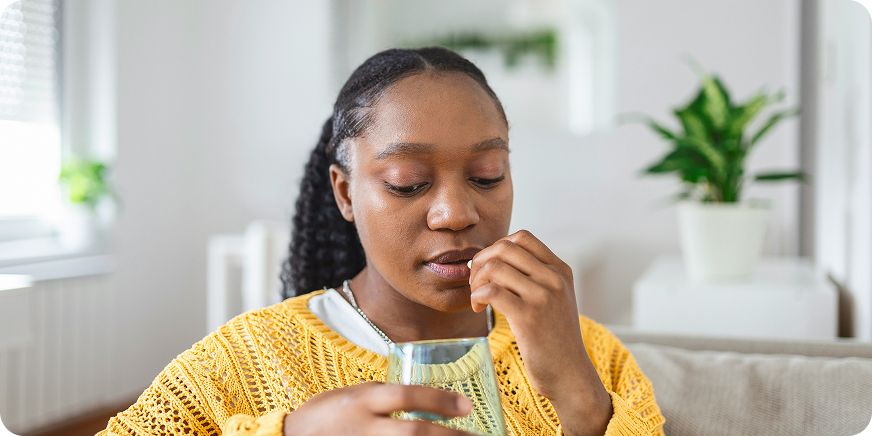
Swallow one mifepristone pill with water.
It’s unlikely, but if you throw up in the first 30 minutes after taking mifepristone, please message your care team as soon as possible. If you throw up after 30 minutes, you do not need to contact your care team as the medicine has been absorbed.
Optional: If you tend to get nauseous, you’ve been feeling nauseous with the pregnancy, or you feel nauseous after taking the mifepristone you can take one ondansetron (anti-nausea) pill under your tongue and let it dissolve at least 30 minutes before starting Step 1. This medication is included in your Hey Jane treatment.
Step 2: Take your comfort medicines and misoprostol pills
You can take the second type of pill, misoprostol, several different ways: vaginally, between your cheeks and gums (buccally), and under your tongue (sublingually). All three methods of taking misoprostol are equally effective, according to a 2019 Cochrane review. The difference is in side effects as sublingual causes the most nausea, while vaginal causes the least.
Choose a time to start Step 2 when you’ve had a good meal and plenty of rest, as bleeding and cramping usually start within a few hours after Step 2. We strongly recommend taking both ondansetron (antinausea) and ibuprofen or acetaminophen (pain relief) medicine at least 30 minutes before taking the misoprostol. Please follow the instructions on your pill bottles.
How to take misoprostol vaginally
This method causes the least nausea, and you can start it anywhere from 6 to 48 hours after Step 1. First, go to the bathroom to empty your bladder and wash your hands. Either in a squatting position or lying on your back or side, use your fingers to push 4 misoprostol pills (one by one) deep into your vagina. They should be at least one finger’s distance inside. After the pills are inserted, lie down and wait for 30 minutes.
After 30 minutes, the medicine is absorbed. It is okay if the pills fall out after 30 minutes, and they can be thrown away. If they fall out before 30 minutes, please message your care team.
Tip: Do not use lube to insert the pills vaginally. Instead, you can moisten the pills with a little water before insertion to make this method easier.

How to take misoprostol between your cheeks and gums (buccally)
This method causes some nausea—more than inserting misoprostol into your vagina, but less than letting it dissolve under your tongue. It can be started 24-48 hours after Step 1.
Put 2 misoprostol pills on one side of your mouth (between your cheeks and gums) and the other 2 misoprostol pills on the other side of your mouth.
Wait 30 minutes for the pills to dissolve, then swallow what is left of the pills. It is okay to swallow your saliva as the pills dissolve.

How to take misoprostol sublingually (under the tongue)
This method causes more nausea because misoprostol is absorbed so well under the tongue that it can start working faster and as a consequence, be much more intense. This route can therefore cause more side effects. If taking misoprostol sublingually, you can start Step 2 anywhere from 24 to 48 hours after Step 1.
Put 4 misoprostol pills under your tongue and hold them there with your mouth closed so the pills stay in place. Wait 30 minutes for the pills to dissolve, then swallow.
If you throw up after 30 minutes, you don’t need to contact your care team because the medicine is already absorbed. We recommend you use the anti-nausea medication and focus on staying hydrated with fluids that contain electrolytes.

Worried you might be pregnant? Hey Jane can help


Step 3: When to take a second round of misoprostol
Depending on how many weeks the pregnancy is and when you start bleeding after Step 2, you may or may not need to take additional pills as described in Step 3. Check the instructions your Hey Jane provider included in your prescription message and on your pill bottle. If you are uncertain about whether or when to take more misoprostol, send a message in the patient portal during business hours or call the urgent line outside business hours.

Step 3: Take the additional misoprostol pills (if needed)
You only need to complete Step 3 if:
- The pregnancy is 9 weeks or more—wait 4 hours and then complete Step 3 OR
- The pregnancy is 8 weeks and 6 days or less and you have not experienced bleeding or passed blood clots/tissue 24 hours after Step 2.
(Note: It is common for bleeding to be lighter than a period for people that are earlier in their pregnancy, typically 6 weeks or less).
Complete Step 3 by taking 4 misoprostol pills—either under your tongue or between your cheeks and gums. Wait 30 minutes for the pills to dissolve, then swallow what is left of the pills.
You can also take 4 misoprostol pills vaginally, but only if you have not started bleeding yet. Wait 30 minutes for the pills to be absorbed. If the pills fall out after 30 minutes, it is okay and you can throw them away.
Note: If the pregnancy is less than 9 weeks and you have experienced bleeding or passed blood clots/tissue within 24 hours after Step 2, you can skip Step 3.
How late can you take the abortion pill?
While the abortion pill is only prescribed up to 10 weeks, you can take it up to 11 weeks (or 77 days) into pregnancy. After 11 weeks, you can get a procedural abortion at an in-person clinic.
How long does it take misoprostol to dissolve?
Mifepristone, the first medication taken, is swallowed with water and does not need to dissolve in your mouth. Misoprostol, the second medication, takes about 30 minutes to be absorbed, regardless of how you take the pills. After 30 minutes, you can throw out any remaining pills if taken vaginally, or swallow any remaining pills if taken buccally (between your cheeks and gums) or sublingually (under your tongue).
How do I know if the abortion pill worked?
You should have cramping and bleeding after taking the second medication, misoprostol, usually as heavy or heavier than your period. This may include clots or tissue.
Your pregnancy symptoms such as nausea and breast soreness should start to decrease 24 hours after you have completed treatment, and resolve completely in the weeks after. A urine pregnancy test can stay positive for about 4 weeks after a successful medication abortion due to residual hCG levels, according to ACOG. This is normal, so it’s important not to take a test sooner. Hey Jane's care team will advise on follow-up testing timing.
What should I expect after taking abortion pills?
Remember that each person’s experience is different and symptoms can vary from person to person.
A closer look at bleeding:
Heavy bleeding and strong cramps usually start about 4-6 hours after taking the second medicine, misoprostol, but can take up to 24 hours. Once bleeding starts, it can last for a few hours (typically around 6 hours). Heavy bleeding does not usually last more than 24 hours, and then it gets lighter. It’s normal to have bleeding or spotting for a few days or weeks after treatment. It may start and stop a few times, but should get lighter over time. Heavy bleeding is normal after misoprostol. For a complete guide on what to expect, see abortion pill bleeding .
Bleeding can be very heavy, even heavier than your period, and can include clots ranging in size. With pregnancies 6 weeks or less, it is common for bleeding to be lighter than a period. Use heavy flow menstrual pads so you can tell how much you’re bleeding. You can use tampons when the heavy bleeding lets up.

You may see pregnancy tissue that comes out with the bleeding, which can look like a shiny blood clot or can be white or gray in color. It is safe to dispose of the pregnancy tissue in the same way you would pads or tampons, or to flush it down the toilet, but you may also choose to dispose of it in a different manner that reflects your personal or cultural values.
It is ok if you do not see anything - that does not mean the treatment isn’t working.
Your period should return within 4 to 8 weeks after a medication abortion, according to a 2022 review in the American Journal of Obstetrics and Gynecology, though timing varies from person to person. People usually ovulate about 2 weeks before a period, which means you can get pregnant immediately after an abortion.
A closer look at pain and cramping
Strong cramping is a normal part of the treatment and usually starts a few hours after taking the second medicine, misoprostol. Here are some things that can help:
- Pain medicine, like ibuprofen or acetaminophen
- Put a hot water bottle or heating pad on your belly
- Take a shower
- Sit on the toilet
- Have someone rub your back
- Drink warm tea or soup
You will cramp less as the hours and days go by and once the pregnancy has passed.
How do I take care of myself after a medication abortion?
Do something that makes you feel good! Whether this process was a big deal for you or just another day, take some time to listen to your body, and do something nice for yourself. It's safe to go back to your regular activities - school, work, driving, exercise - as soon as you feel up to it. You can have sex whenever you are ready (more about sex after an abortion here), and can use tampons or menstrual cups once your bleeding has lightened up.
For next steps after treatment, follow Hey Jane's abortion aftercare guide .
Learn more about your local abortion options


.avif)